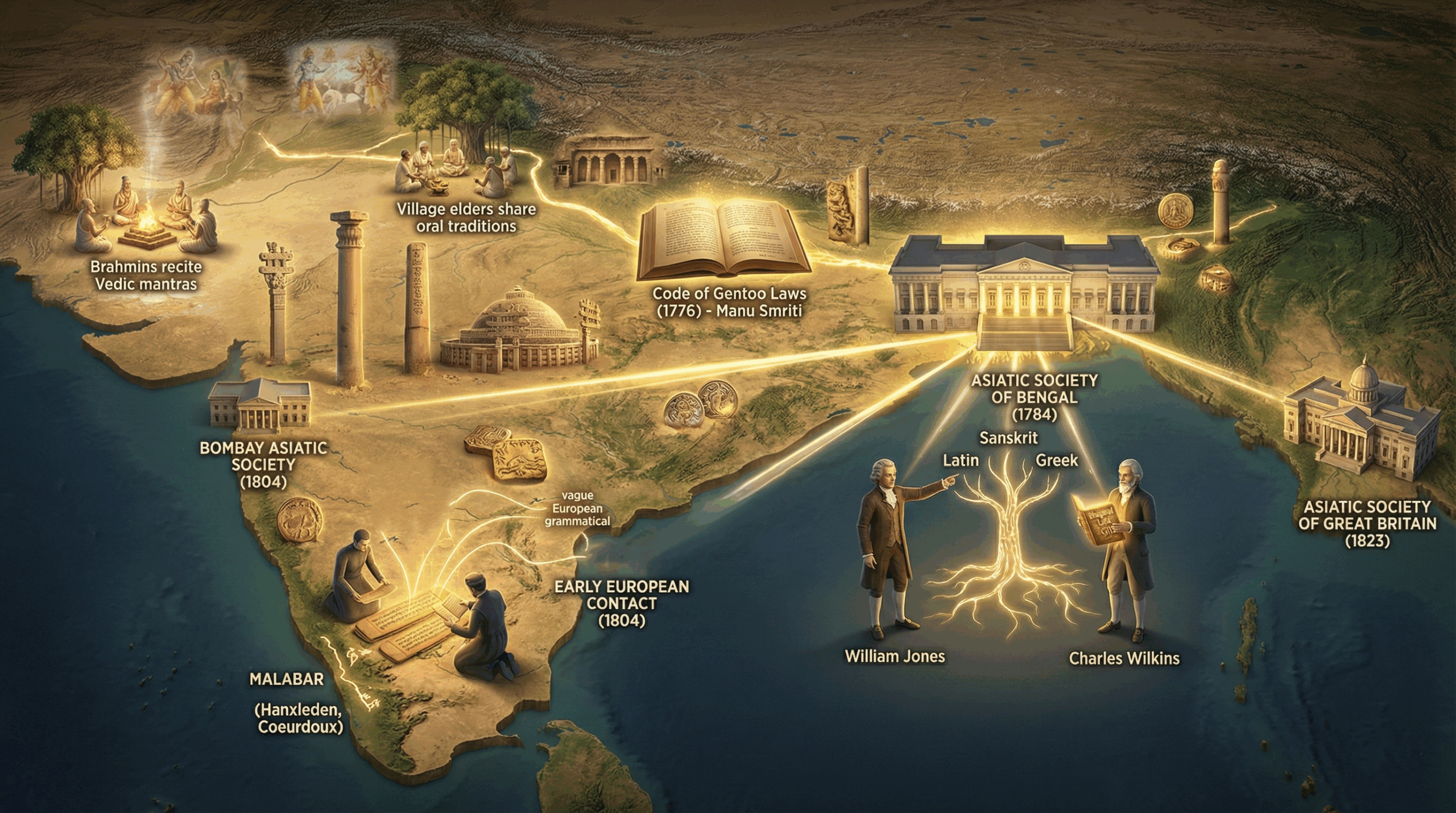
‘How the ancient history of India in modern times came to be noticed’ Introduction Ancient Indian civilization was unlike those […]

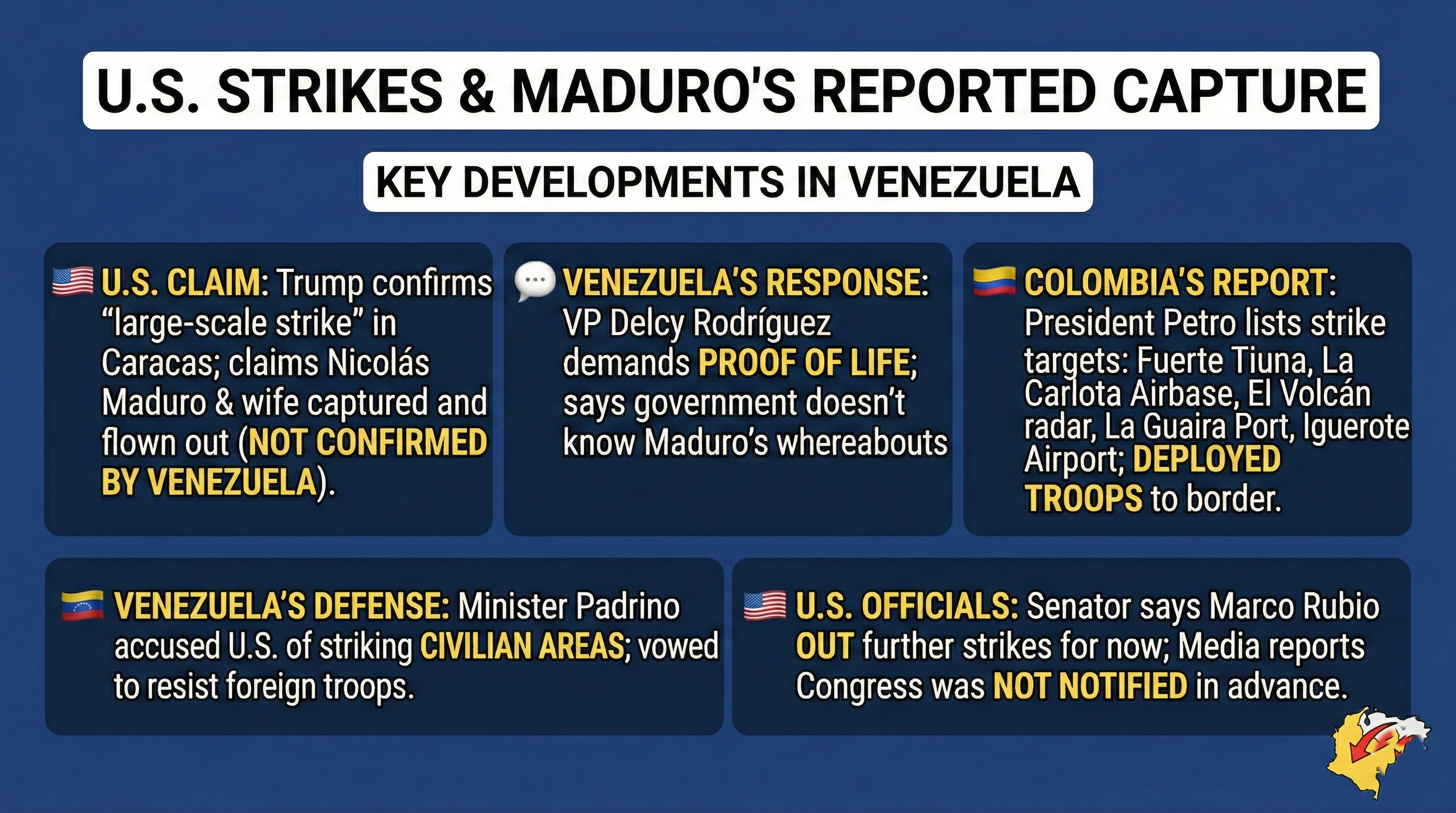
A time bound account of sanctions disputed elections counter narcotics justification. And the January 2026 US air strikes on Caracas.
Introduction
In the early hours of January 3, 2026 US aircraft struck targets in Caracas, marking the first direct American military attack on Venezuela and collapsing a long-standing US policy that treated narcotics trafficking as a law enforcement problem, rather than grounds for interstate war.
Location of US and Venezuela
The United States is located in North America with its capital at Washington, DC., where political power is centred in the White House (executive) US Congress (legislative) and Pentagon (military). The Venezuela lies in the Northern South America along the Caribbean coast, with its capital at Caracas, which hosts the Miraflores palace (presidency), National Assembly, and made the military command such as FuerteTiuna.
President Donald Trump of USA, called the operation “successful” and claimed Nicholas Maduro (the dictator of Venezuela) had been captured, a claim Venezuela denies while Colombian and Venezuelan officials confirmed strikes on major military installations.
The attack followed months of naval deployments, congressional bypasses and the formal launch of Operation Southern Spear, through which the United States redefined drug cartels as armed enemies and Venezuela as a battlefield. What had been a sanctions driven pressure campaign has now crossed into open military force, reshaping the legal, political and strategic boundaries of US action in Latin America.
Unto when, the conflict can be traced back to?
The roots of the US-Venezuela confrontation lie in Venezuela’s political shift after Hugo Chavez assumed power in 1999 in Caracas, restructuring the economy around state control of oil revenues through PDVSA, expanding welfare while Increasing oil dependence from approximately 71% of exports in 1998 to nearly 98% by 2013, a structural vulnerability exposed when global oil prices collapsed in 2014, triggering recession, fiscal crisis and nationwide infrastructure decay.

After Chavez’s death In March 2013, Nicolas Maduro became president and responded to falling revenues by printing money from 2014 onward, causing hyperinculation that peaked between 2017 and 2019. Widespread shortages and mass protests across major cities, including Caracas, Maracaibo, Valencia, while political legitimacy eroded following the opposition’s victory in the 2015 National Assembly elections.
Maduro’s May 2018 presidential re-election held without Credible International Monitoring, was rejected by the opposition and condemned by the United States and European Union, leading to a constitutional crisis when Juan Guaido declared himself interim president in January 2019 in Caracas and was immediately recognised by Washington.

What went on in the last decade between US and Venezuela?
From 2017 to 2020, the United States imposed escalating sanctions targeting Venezuelan oil exports, financial transactions, and foreign partners, severely restricting PDVSA’s operations, while Venezuela relied on political, economic and security support from Russia, China and Cuba, including Russian military deployment to Venezuela in March. 2019, food and medicine shortages, and the displacement of nearly eight million Venezuelans by the early 2020s, most fleeing through the Columbia-Venezuela border.
Although Maduro partially stabilised the economy through dollarisation and market reforms between 2019 and 2022, political tensions resurfaced sharply after the July 2024 presidential election, conducted nationwide without independent observers, where opposition tallies showed Edmundo Gonzalez Urrutia winning while the government- controlled electoral council declared Maduro the victor, prompting the United States and European Union to reimpose sanctions and formally reclassify Venezuela as a hostile authoritarian state.
What happened as the current regime of United States was elected?
The conflict entered a military phase after Donald Trump returned to office in January. 2025, accusing the Maduro government of directing cocaine trafficking through the Caribbean and Central America, formerly linking Venezuela to the Cartel de los soles and designating associated groups, including Tren de Aragua, as foreign terrorist organisations. In August 2025, Trump authorised the US Military to use force against selected Latin American drug cartels and deployed US Naval forces to waters north of Venezuela in the Caribbean Sea.
What military operation was worked on by US?
This escalation was institutionalised with the launch of Operation Southern Spear on November 13, 2020, when US Defence Secretary Pete Hegseth announced AUS military “counter narco terrorism” campaign led by United States Southern Command and Joint Task Force Southern Sear, deploying approximately 15,000 US Personal, including aircraft carriers, amphibious assault ships, bombers, drones and autonomous naval systems across the Caribbean Sea and eastern Pacific Ocean, with Venezuela identified as a primary operational focus.
The operational followed the US Senate’s rejection of a bipartisan war powers resolution limiting military action against Venezuela and was reinforced on December 17, when the U. S House rejected two resolutions seeking to constrain the campaign; by December 2, the Pentagon reported 21 strikes and 82 deaths, alongside a naval blockade of sanctioned Venezuelan oil tankers, signalling a shift from law enforcement-based interdiction to sustained military force.

How the situation in between US and Venezuela escalated?
On September 2, 2025, US Navy units conducted a strike on a vessel in Caribbean waters claimed to be transporting cocaine from Venezuelan networks towards United States, killing 11 people, making the first navy only counterdrug strike conducted without Coast Guard Involvement. Following this operation, the Trump Administration formally notified Congress that the United States considered itself in an “armed conflict” with designated drug cartels, redefining counter narcotics enforcement from a policing mission into a military campaign, a move widely criticised by legal experts for lacking clear statutory and international legal authorization.
Opinion
The United States has officially maintained the drug trafficking should be addressed through law enforcement interdiction and international cooperation, not interstate military force and successive administrations avoided direct attacks on sovereign states without congressional authorization. Yet, on January 3rd, 2026 under Donald Trump, the US Carried out large scale airstrike inside Venezuela, a country with which it is not formally at war, without prior notification to key congressional bodies, despite the war progress framework requiring legislative oversight. The strikes hit government and military sites in Caracas, and claims were made about capturing Venezuela’s president without independent verification, while US Officials themselves later said no further strikes are planned, Under scoring the ad hoc nature of the operation.
Critics argue that moving from sanctions and policing to sudden military force against Venezuela without a declared war, clear legal mandate or immediate armed attack on the US- represents a sharp break from established US Policy and risks normalising unilateral military action against weaker states.
‘How the ancient history of India in modern times came to be noticed’ Introduction Ancient Indian civilization was unlike those […]

Human societies depend on subtle emotional mechanisms that regulate behavior long before laws, institutions, or punishments come into play. Among […]
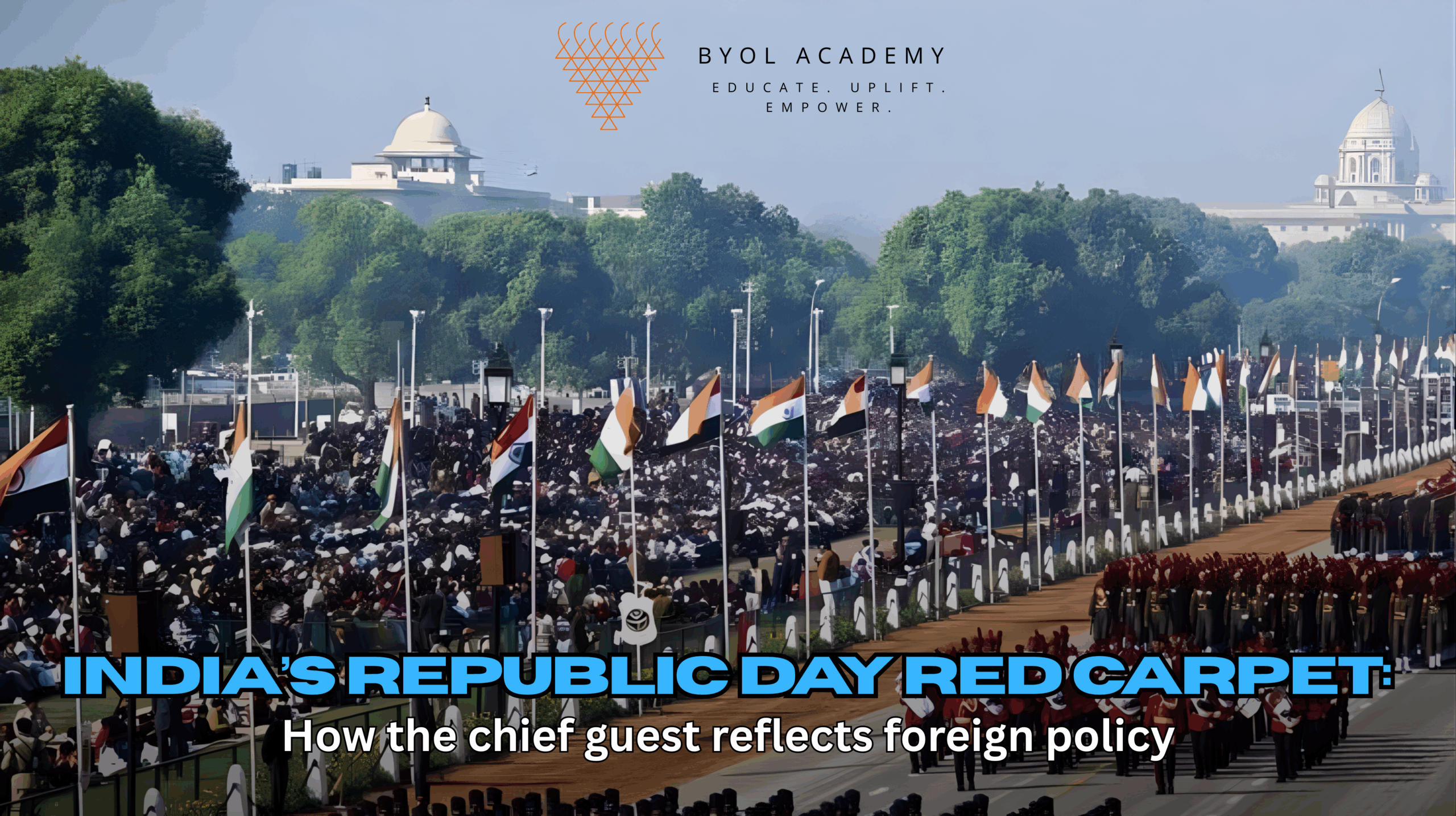
Every year on 26 January, India pauses to commemorate one of the most important milestones in its modern history the […]