Introduction In the realm of logical reasoning, one topic recurs frequently in exams, puzzles and everyday thinking that is blood […]

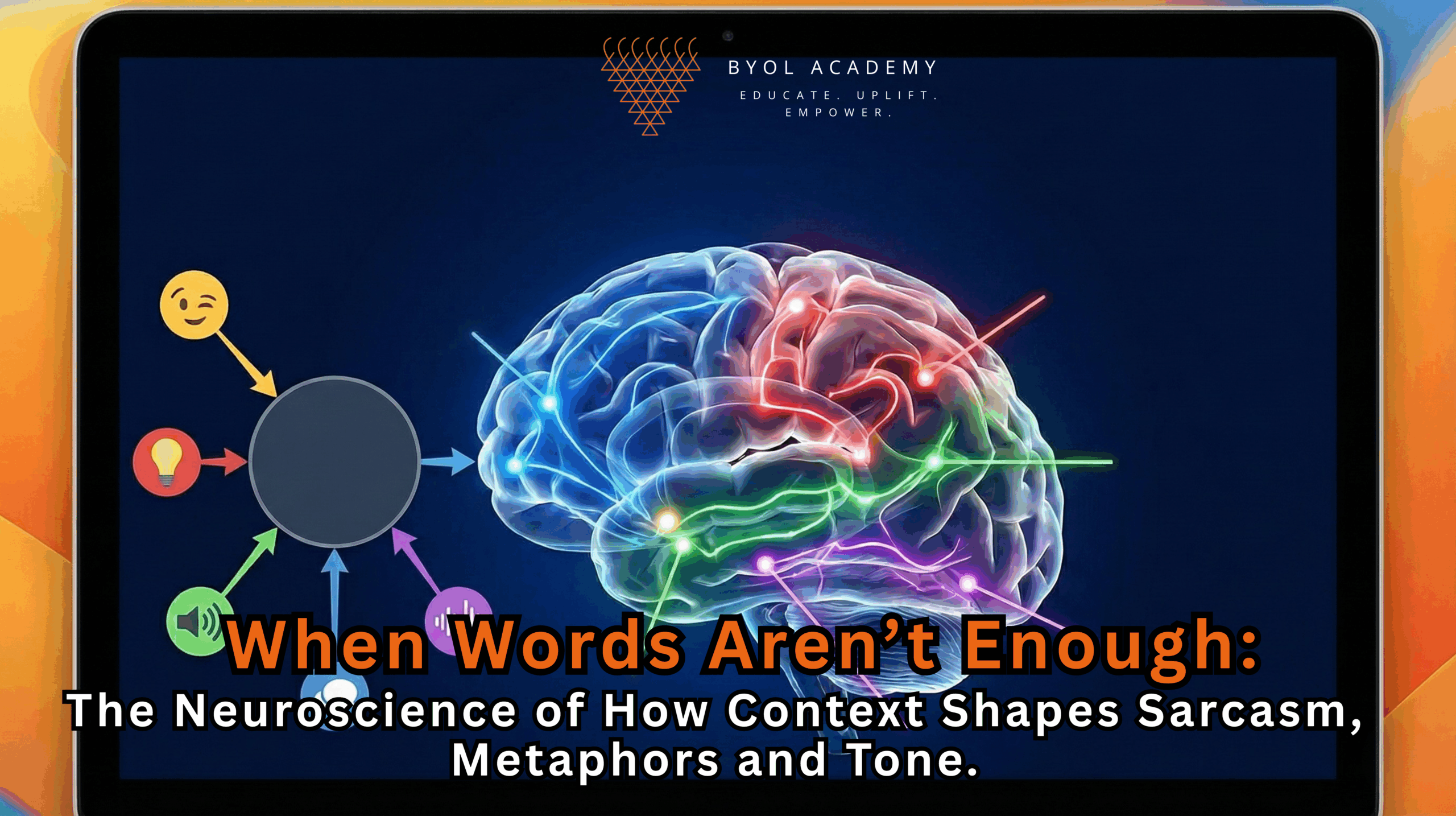
Human conversation works like a quiet mental detective story. Every time someone speaks, the brain races to figure out not only what the words mean, but what the speaker intends. A simple remark during a downpour “lovely weather” is only funny because your brain instantly catches the mismatch between the literal words and the reality around you. This ability to go beyond literal meaning is called pragmatic language, and it sits at the heart of how humans communicate, bond and understand each other.
A new study from researchers at MIT offers the clearest map yet of how the brain organizes these real-world language skills. By examining 800 adults across a broad battery of tasks, the team uncovered three fundamental clusters of pragmatic abilities, each relying on different forms of inference and likely supported by distinct neural systems. Their work, published in the Proceedings of the National Academy of Sciences, brings clinical neuroscience a step closer to understanding why some people glide easily through social conversations while others struggle.
Pragmatics refers to the component of language comprehension that requires listeners to interpret meaning that is not explicitly encoded in words alone. This domain supports abilities such as:
• Detecting sarcasm or irony
• Interpreting metaphors and figurative expressions
• Understanding indirect requests or polite refusals
• Inferring emotion or intention from tone of voice
• Recognizing social norms embedded in communication
• Distinguishing ambiguity created by emphasis or prosody
Pragmatics effectively turns language into a predictive, inferential process. The brain must determine the speaker’s communicative goal by integrating literal meaning with contextual cues.
1. Knowledge of social conventions and interpersonal expectations
2. Knowledge of physical reality and cause-effect dynamics
3. Sensitivity to acoustic cues such as pitch, stress and rhythm
The MIT team’s goal was to determine whether these ingredients cluster into discrete cognitive systems, and whether individuals show distinct profiles of strengths and weaknesses across them.
Although fMRI would ordinarily be a method of choice for probing linguistic functions, pragmatic tasks present difficulties for neuroimaging:
• They often involve long narratives rather than tightly controlled stimuli.
• They require interpreting emotion, humor or subtle social cues.
• They cannot easily be restricted to short, repetitive trials.
To circumvent this, the team used individual-differences analysis, a method that identifies latent constructs by examining patterns of performance across large participant samples.
• 800 adult participants, recruited online
• Divided into two independent cohorts of 400
• Completed a 20-task battery spanning humor, irony, metaphor, indirect speech, causal inference, and prosody
• Each participant spent 8 hours completing the tasks
• Tasks were administered in counterbalanced order to control for fatigue effects
• Performance scores were subjected to factor analyses to detect natural clusters
The two-cohort structure ensured that any factors discovered were not due to sampling noise or task ordering.
The battery was designed to capture the full breadth of real-world conversational complexity. While the full tasks span many categories, several standout examples include:
Sarcasm comprehension
Participants judged statements where literal meaning contradicts situational context. Successful interpretation requires detecting speaker attitude and intention.
Metaphor interpretation
Tasks assessed the ability to infer non-literal analogical relationships (e.g., “Her mind was a locked room”).
Indirect request detection
Participants evaluated sentences like “It’s cold in here,” which may function as requests for action.
Causal inference from world knowledge
Participants used real-world reasoning to fill in implied events or consequences that were not explicitly stated.
Prosody-based meaning shifts
Sentences differed only in which word received emphasis, altering implied meaning (e.g., “I asked for BLUE socks” vs. “I asked for blue SOCKS”).
The battery was designed to be culturally general but still sensitive enough to capture variability across individuals.
Discovery of Three Fundamental Clusters of Pragmatic Ability
Across both cohorts, factor analysis revealed three stable components, each representing a distinct form of inferential processing.
This cluster included tasks involving:
• sarcasm
• irony
• indirect requests
• polite speech
• conversational implicature
These tasks require the listener to model the speaker’s mental state and intentions. This process is tightly linked to the Theory of Mind network, a set of brain regions including the medial prefrontal cortex, temporoparietal junction and posterior cingulate cortex.
Functional interpretation:
This dimension represents the social cognitive machinery underlying interpersonal communication. It is a likely candidate for disruption in neurodevelopmental conditions such as autism spectrum disorder (ASD), where individuals may struggle with indirect or socially nuanced language.
Cluster 2: Physical-World Inference
This included tasks relying on:
• Causal reasoning
• Expectations about real-world event sequences
• Assumptions about the physical environment
Listeners must use domain-general reasoning systems and knowledge of the world to infer what the speaker intends.
Example:
If a character says, “The vase fell,” the implication might be blame, carelessness or an impending mess, depending on context. These inferences rely on intuitive physics, prediction systems and non-social reasoning abilities.
Functional interpretation:
This cluster likely overlaps with the brain’s multiple-demand network, which supports high-level reasoning, prediction and problem solving.
Cluster 3: Prosodic (Intonation-Based) Inference
This cluster involved tasks where meaning shifts solely through:
• stress
• pitch
• rhythm
• emotional tone
These tasks require precise auditory processing and sensitivity to emotional voice cues.
Functional interpretation:
This ability likely draws on the right hemisphere’s prosody network, including the right superior temporal gyrus and right inferior frontal cortex, which specialize in processing speech melody and affective tone.
Controlling for Confounds: Intelligence and Auditory Acuity
The researchers rigorously tested whether cluster membership simply reflected variations in:
• General intelligence
• Working memory
• Auditory perceptual thresholds
• Verbal fluency
The findings remained robust after adjusting for these variables. This confirms that the pragmatic clusters represent true psychological constructs, not artifacts of hearing ability or IQ.
Implications for Neuroscience
This large-scale behavioral model sets the stage for future neuroimaging studies that can map the three pragmatic components to specific neural networks.
Potential neural correlations include:
1. Language network – supporting structural and lexical processing
2. Theory-of-mind network – supporting social inference
3. Multiple-demand network – supporting domain-general reasoning
4. Right-hemisphere auditory regions – supporting prosody
Previous research suggests these systems interact dynamically during natural conversation. The MIT findings now offer precise behavioral metrics for linking tasks to neural circuits.
Implications for Clinical Populations
Autism Spectrum Disorder (ASD)
Individuals with ASD often show selective difficulties with:
• Sarcasm
• Indirect requests
• Subtle emotional tone
This study’s battery could help characterize their specific pragmatic profile with unprecedented precision.
Brain injury and stroke
Lesions in right-hemisphere temporal regions may disrupt prosody-based inference, while lesions in social cognition networks may impair sarcasm comprehension.
Neurodegenerative disorders
Conditions such as frontotemporal dementia often impair social–conventional inference early in disease progression.
Hearing impairment
Understanding the separation between prosodic and social reasoning components may help design targeted interventions.
Pragmatic norms are highly culture-dependent. Languages differ in their use of:
• indirect requests
• politeness strategies
• emotional tone
• sarcasm frequency
As noted by co-author Olessia Jouravlev, speakers of Russian (her native language) tend to be more direct than English speakers. This suggests that individuals from different cultural backgrounds may show different weighting across the three clusters.
The task battery provides a rigorous toolset for systematically studying these differences.
Human communication relies on far more than literal word meaning. The work conducted by Fedorenko, Gibson and colleagues demonstrates that pragmatic language is not a single skill but a composite of three separable inferential systems, each drawing on different forms of knowledge.
These findings move cognitive neuroscience closer to:
• Developing precise clinical assessments
• Linking pragmatic deficits to distinct neural pathways
• Modeling human communication in artificial intelligence
• Understanding cultural diversity in language use
• Designing targeted rehabilitation for patients with language and social cognition impairments
Ultimately, this work reframes pragmatic language as a network-level phenomenon, one that relies on the integration of social reasoning, environmental knowledge and fine-grained acoustic analysis.
Introduction In the realm of logical reasoning, one topic recurs frequently in exams, puzzles and everyday thinking that is blood […]

Introduction Physical education is a cornerstone of holistic development for all children, fostering physical fitness, social skills, and emotional well […]
Introduction Reasoning ability forms the foundation of logical thinking, decision-making, and problem-solving. Whether a student prepares for competitive exams or […]