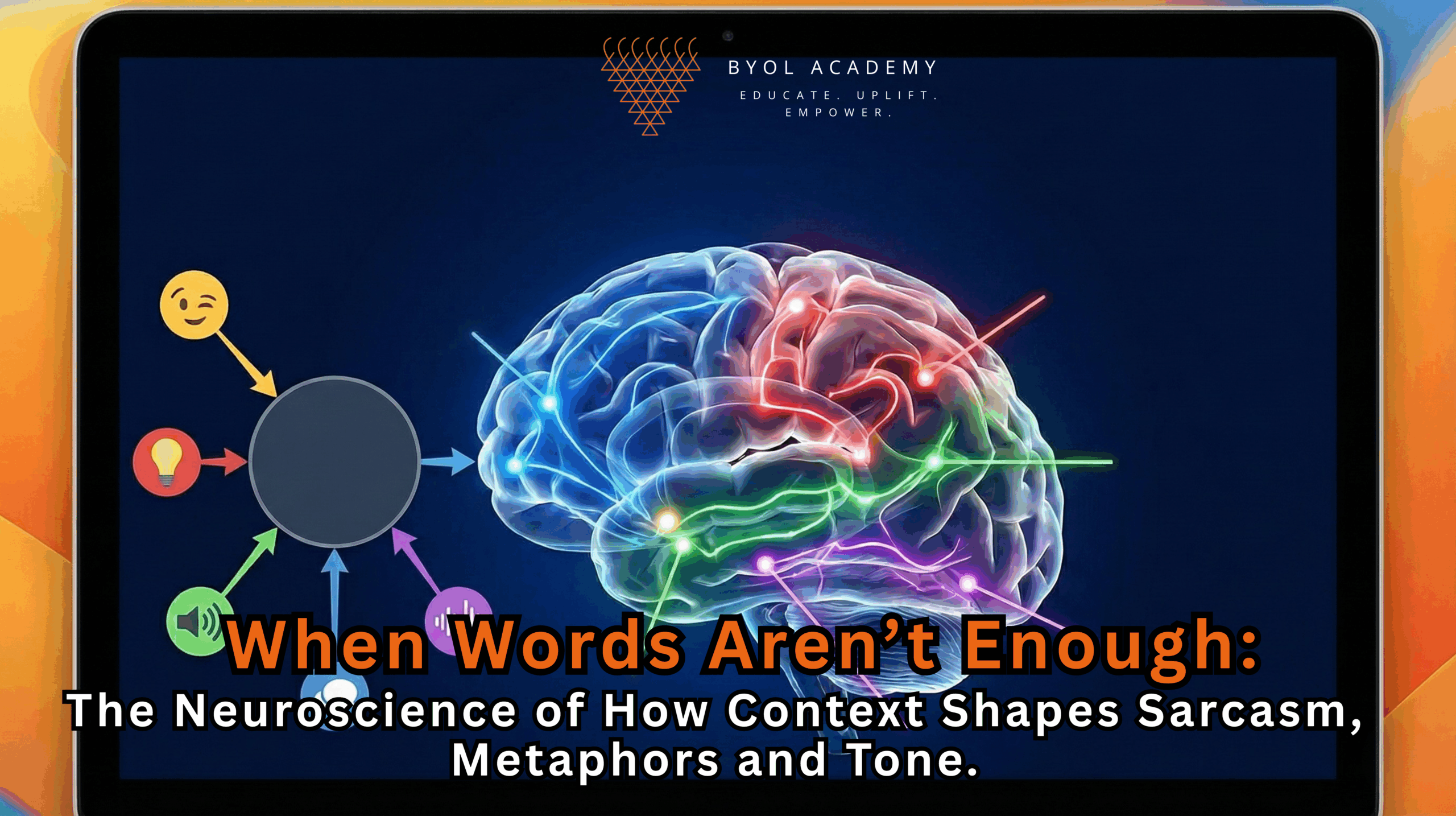
Human conversation works like a quiet mental detective story. Every time someone speaks, the brain races to figure out not […]

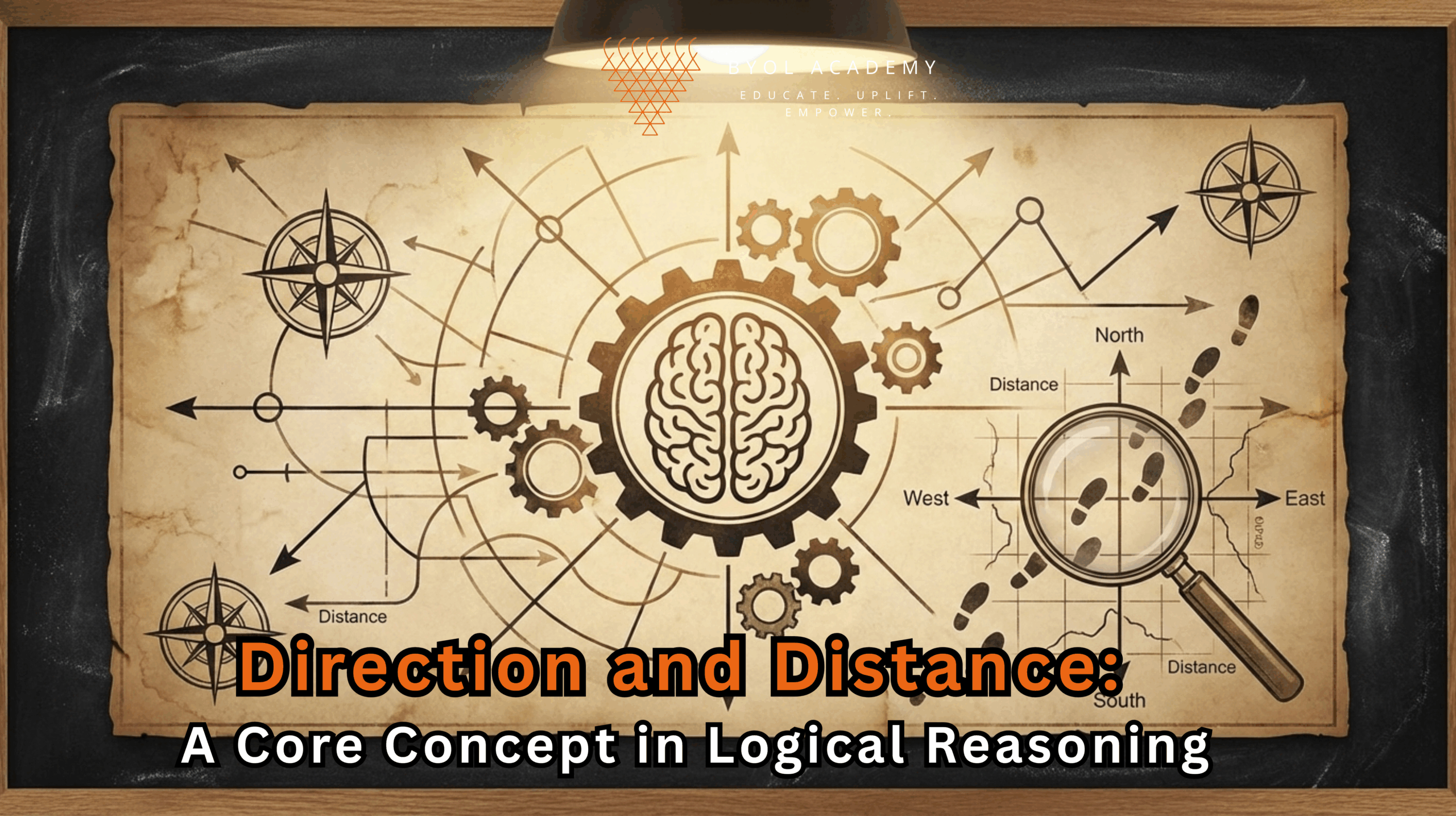
Reasoning ability forms the foundation of logical thinking, decision-making, and problem-solving. Whether a student prepares for competitive exams or an individual deals with everyday tasks, reasoning skills play a major role in shaping judgment, perception, and clarity of thought. Among the numerous reasoning chapters, Direction and Distance is one of the most practical and widely used topics. It not only helps in solving exam questions but also guides us in real-life navigation, movement, mapping, and understanding geographical directions.
Direction and Distance questions appear in almost all competitive exams such as SSC, Banking, Railways, State PSC, Police Exams, Defence Exams, Management Entrance Tests, and many aptitude-based assessments. This topic tests your ability to understand orientation, track movement, visualize paths, measure distance traveled, and predict final positions.
Mastering Direction and Distance not only improves mental orientation but also enhances your ability to imagine spatial movements clearly. As exams increasingly focus on conceptual clarity and speed, Direction and Distance becomes a scoring and high-utility chapter for every aspirant.
This article provides a detailed guide on Direction and Distance, covering its definition, types, examples, practical uses, importance, and references to help students build strong conceptual understanding.
Direction and Distance in reasoning refers to the study and interpretation of a person’s or object’s movement in a specific orientation, followed by the calculation of the final position and total distance traveled.
It involves two key components:

Direction indicates the orientation or position of a person or object relative to a reference point.
Common directions are:
Main Directions: North, South, East, West
Sub Directions: Northeast, Northwest, Southeast, Southwest
Relative Directions: Left, Right, Front, Back

Distance refers to the length of the path a person or object covers during movement.
Direction and Distance problems require you to:
In simple words:
Direction tells us where someone is moving.
Distance tells us how far they are moving.
Together, they help solve the final orientation of a person or object after a sequence of movements.
Direction and Distance questions come in different formats and patterns. Understanding their types helps in solving them quickly.
(A) Basic Direction Problems
Questions that use simple directions such as North, South, East, West.
Example:
A person moves east for 5 km, then north for 3 km.
Question: A person walks 4 km north, then 3 km east. What is his final position from the starting point?
Solution: Create an L-shaped diagram.
North = 4 km
East = 3 km
Shortest distance = √(4² + 3²)
= √(16 + 9)
= √25
= 5 km
Answer: He is 5 km away in the northeast direction.
(B) Left Right Turn Based Problems
These involve the relative movement of left or right turn from a current direction.
Example: If you are facing East and turn right, you will face South.
Question: A boy is facing North. He turns right, walks 5 km, then turns left and walks 4 km. What direction is he facing now?
Solution: Facing North → Right turn = East
Walks 5 km → Direction = East
Left turn from East = North
Answer: He is facing North.
Question: A man walks 2 km north, 3 km east, 2 km south, then takes a right turn and walks 3 km. What direction is he facing?
Solution: Facing South → right turn = West
Answer: West
(C) Shortest Distance Problems
These require calculation of direct distance using the Pythagorean theorem after multiple movements.
Example: A person moves in an L-shaped path; find the shortest distance.
Question: A man walks 8 km west, then 6 km south. What is the shortest distance from the starting point?
Solution: Shortest distance = √(8² + 6²)
= √(64 + 36)
= √100
= 10 km
Answer: 10 km
(D) Reverse or Opposite Direction Problems
These involve finding opposite direction or return direction.
Example: If a person faces Northeast, the opposite direction is Southwest.
Question: If a person is facing Northeast, what is the opposite direction?
Answer: Opposite of Northeast = Southwest
(E) Multi-person Direction Problems
Here, movement of more than one person is given, and their relative position is asked.
Example: A and B walk in different directions; find where they meet.
Question: Rohan walks: 3 km North → 4 km East → 3 km South → 4 km West
Where is he from the starting point?
Solution:
North-South cancel (3 km up, 3 km down = 0)
East-West cancel (4 km right, 4 km left = 0)
He returns to the starting point.
Answer: Rohan is at the starting point.
(F) Angle-based Direction Problems

These include directional turns at angles such as 30°, 45°, 60°, or 90°.
Example: A person turns 90° right from the north.
(G) Movement in Square and Rectangle Paths
Questions include movement around blocks, streets, or rectangular areas.
(H) Direction Puzzles
More complex with multiple movements and need diagrammatic understanding.
DIRECTION & DISTANCE:– TRICKS, QUESTIONS & ANSWERS
TRICK 1: Always Draw a Simple Plus (+) Sign
The easiest way to solve direction questions is to start with a simple cross diagram:

This gives instant clarity and reduces mistakes.
TRICK 2: Learn Left–Right Turns Quickly
Facing direction → Left/Right rule: Current Facing Left Turn Right Turn
North West East
South East West
East North South
West South North
IMPORTANT TIP:
Memory trick: When facing North, Left is West (NLW), remember this and the rest follow easily.
Example 1: A person is facing East. He turns right. Which direction is he facing?
Solution: Facing East → Right turn = South
Answer: South
TRICK 3: Total Distance = Add all steps But
Shortest distance = Use Pythagoras theorem
Formula: {Shortest Distance} = c²=(a² + b²) or c= √(a² + b²)
Example 2 A person walks 6 km North and then 8 km East. What is the shortest distance from the starting point?
Solution: Shortest = √(6² + 8²)
= √(36 + 64)
= √100
= 10 km
Answer: 10 km
TRICK 4: Opposite Directions
Opposites are:
North ↔ South
East ↔ West
Northeast ↔ Southwest
Northwest ↔ Southeast
Easy trick: If it sounds opposite, it is opposite.
Example 3 Opposite of Southwest?
Answer: Northeast
TRICK 5: Cancel Opposite Movements
If a question has back and-= forth moves, cancel them.
Example: North 5 km → South 5 km = 0 km
Example 4 A person walks: 4 km North → 4 km South → 7 km East. Find final distance from start.
Solution: North-South cancels = 0
Remaining = East 7 km
Answer: 7 km East
TRICK 6: Return Direction Is Always THE OPPOSITE
To return to start → move in opposite direction of final position.
Example 5 A man walks 10 km East. Which direction to return?
Answer: West
TRICK 7: Combine Horizontal & Vertical Distances Separately
Horizontal = East–West
Vertical = North–South
Calculate final position using differences.
Example A man walks: North 9 km, South 5 km, East 12 km, West 7 km. Find final position.
Solution: Vertical: 9 – 5 = 4 km North
Horizontal: 12 – 7 = 5 km East
Shortest distance = √(4² + 5²)
√41 ≈ 6.4 km
Answer: 6.4 km Northeast
TRICK 8: Multi-turn Problems → Use Step by Step Chart
Break movements into table form: step Direction Distance
1. North 3 km
2. Right → East 4 km
3. Left → North 2 km
Example 7 A person walks 3 km North, turns right and walks 4 km, turns left and walks 2 km. What is his final direction?
Solution: North → Right = East → Left = North
Answer: North
TRICK 9: If Return to Same Spot → Distance = 0
Square or rectangle path often returns to starting point.
TRICK 10: Two-Person Relative Position
Treat both persons as starting at same point unless stated otherwise.
Example 8 A walks 4 km North, 6 km East, 4 km South, 6 km West. Where is he?
Answer: At the starting point
Example 9 A walks 6 km North. B walks 8 km East. Distance between A and B?
Solution: Distance = √(6² + 8²)
= 10 km
Answer: 10 km
BONUS SUPER TRICK – L-Shaped Movement Formula
If someone goes in an L-shaped path:
Example: 10 km North and 24 km East
Then shortest = √(10² + 24²)
= 26 km (Pythagorean triplet)
Useful triplets:
3, 4, 5
5, 12, 13
6, 8, 10
7, 24, 25
8, 15, 17
Direction and Distance play a crucial role in day-to-day activities. Some practical uses are:
(1) Navigation and Travel
(2) Mapping and Geography
(3) Everyday Movement
(4) Robotics and AI
(5) Sports and Games
(6) Disaster Management
(7) Military Operations
(8) Astronomy
(9) Construction and Architecture
Direction and Distance are important for the following reasons:
(A) Enhances Spatial Intelligence
(B) Strengthens Logical Reasoning
(C) Highly Scoring in Exams
(D) Useful in Real-life Navigation
(E) Improves Visualization Skills
(F) Builds Analytical Thinking
(G) Basis for Advanced Topics
The concept is used in: Blood relation puzzles, Seating arrangements, Map-based questions, Coding-decoding, Logical deduction Thus, it becomes a foundational reasoning skill.
Direction and Distance is not just a topic for competitive exams—it is a skill that reflects how well you understand movement, space, and logic. From simple navigation to high-level reasoning puzzles, the importance of this chapter extends far beyond the world of academics. With practice, diagrams, and clear understanding, anyone can master this topic.
Direction and Distance is a core reasoning chapter that teaches how to interpret orientations, measure movements, and calculate final positions. It is used in day-to-day life and is a crucial part of competitive examinations. The topic enhances visualization, logical thinking, spatial intelligence, and real-world navigation skills. By understanding its types, practicing examples, and applying logical methods, students can easily score full marks in this section.
Whether it is tracking the route on Google Maps, finding the shortest path, or solving exam questions, Direction and Distance helps make complex movements simple and clear. With regular practice, you can turn this chapter into a high-scoring and confidence-building topic in reasoning.
Human conversation works like a quiet mental detective story. Every time someone speaks, the brain races to figure out not […]

Introduction In today’s health conscious world, terms like physical fitness and wellness are often used interchangeably. However, while they are […]

Introduction Maintaining a healthy body weight is crucial for overall health and well-being. One of the most commonly used tools […]