The human brain does not age along a single, uniform trajectory. Instead, brain ageing represents a spectrum of biological outcomes […]

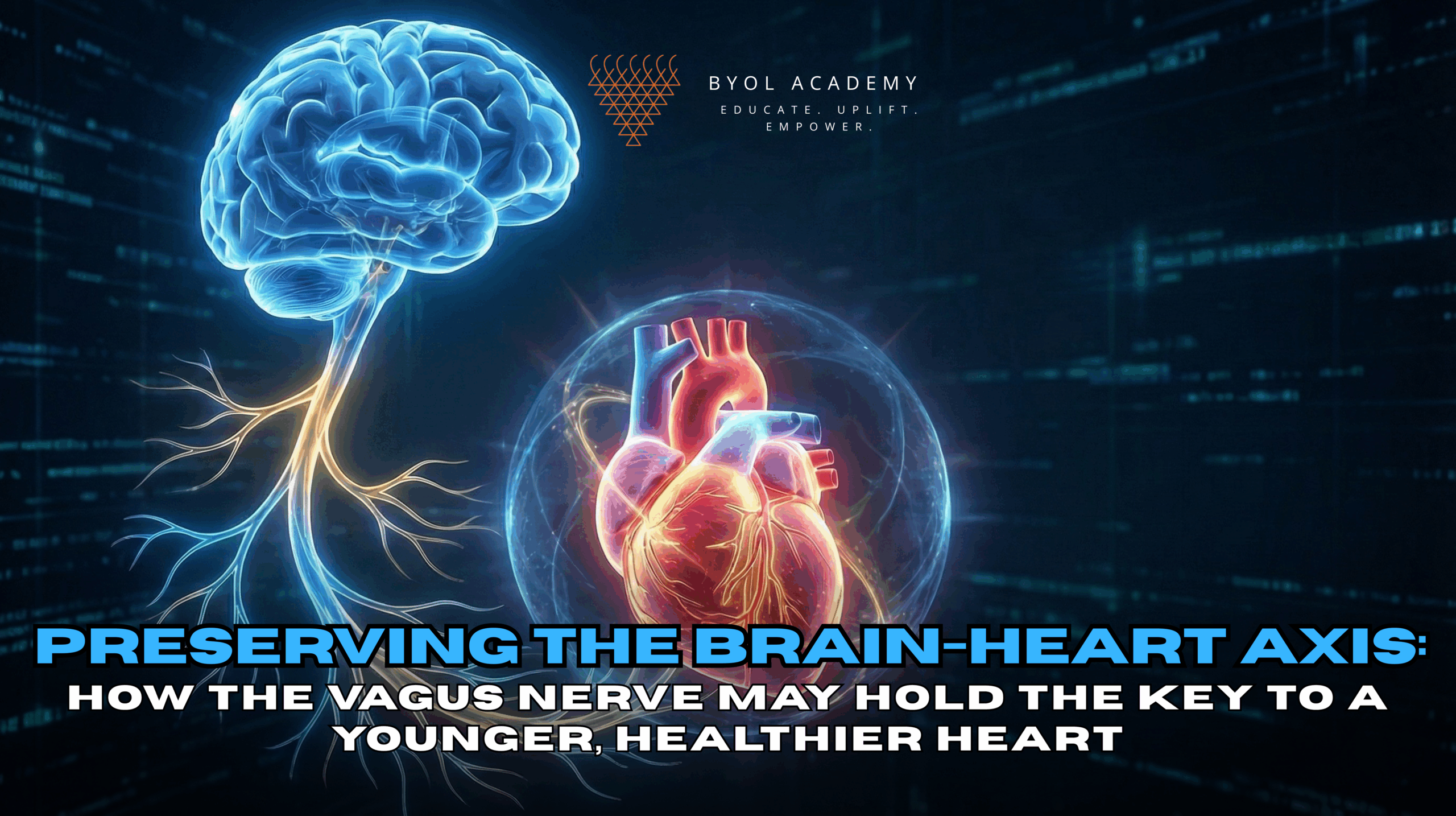
For centuries, the heart was viewed as an autonomous muscular pump remarkably resilient, yet ultimately doomed to age through mechanical fatigue and vascular wear. Modern cardiovascular science has steadily dismantled this simplistic view. The heart is not an isolated organ; it is embedded in a dense regulatory network where neural, immune, metabolic, and mechanical signals continuously interact. Among these regulators, one structure has emerged as especially powerful and surprisingly underappreciated: the vagus nerve.
A landmark international study coordinated by the Sant’Anna School of Advanced Studies in Pisa and published in Science Translational Medicine provides compelling evidence that preserving cardiac vagal innervation is not merely beneficial, but fundamentally anti-aging for the heart. The findings shift the conceptual framework of cardiac aging, positioning neural integrity, particularly of the right cardiac vagus nerve, as a guardian of cardiomyocyte health and myocardial longevity, independent of heart rate control.
This work does more than deepen scientific understanding. It opens a new translational horizon for cardiothoracic surgery, heart transplantation, and preventive cardiology, suggesting that restoring vagal connections could actively prevent premature cardiac aging rather than reacting to its late complications.
The vagus nerve (cranial nerve X) is the principal conduit of the parasympathetic nervous system. Extending from the brainstem to the heart, lungs, and abdominal organs, it serves as a bidirectional information highway. Notably, the majority of its fibers are afferent, carrying sensory information from peripheral organs back to the brain, while efferent fibers modulate organ function in response.
In the heart, vagal activity is traditionally associated with slowing heart rate. However, this view is incomplete. The vagus nerve exerts trophic, anti-inflammatory, and metabolic effects on cardiac tissue. These effects influence cellular survival, mitochondrial function, oxidative stress, and extracellular matrix remodeling core determinants of how the heart ages at a biological level.
The new study demonstrates that when cardiac vagal innervation is intact, the heart maintains structural and functional resilience. When this connection is disrupted, aging accelerates.
One of the most striking insights from this research is the asymmetric role of the right and left cardiac vagus nerves. While both contribute to autonomic regulation, the study reveals that the right cardiac vagus nerve plays a dominant role in preserving cardiomyocyte integrity and longevity.
Importantly, this protective effect is independent of heart rate. This finding challenges decades of cardiology dogma that equated vagal benefit primarily with bradycardia. Instead, the right vagus nerve appears to directly influence intracellular pathways that govern myocardial aging, including:
In other words, vagal input acts less like a metronome and more like a molecular caretaker.
Professor Vincenzo Lionetti, who led the research through the Translational Critical Care Unit (TrancriLab) at the Interdisciplinary Research Center Health Science, summarizes the implications succinctly:
“When the integrity of the connection to the vagus nerve is lost, the heart ages more rapidly.”
Loss of vagal innervation occurs in several clinical contexts:
Traditionally, the long-term consequences of vagal denervation were underestimated. The new evidence suggests that denervation triggers a cascade of maladaptive processes: increased inflammation, altered myocardial metabolism, progressive stiffening, and declining contractile reserve. These changes resemble accelerated aging rather than simple postoperative dysfunction.
Perhaps the most hopeful finding of the study is that complete reinnervation is not required to achieve protection. Even partial restoration of the connection between the right vagus nerve and the heart was sufficient to counteract adverse remodeling and preserve effective cardiac contractility.
As explained by Dr. Anar Dushpanova, cardiologist at TrancriLab:
“Even partial restoration of the connection between the right vagus nerve and the heart is sufficient to counteract the mechanisms of remodeling and preserve effective cardiac contractility.”
This suggests that the heart remains remarkably receptive to neural signals, even after injury. The aging trajectory, once thought irreversible, may be modifiable through targeted neurocardiac interventions.
A defining strength of this study is its deeply multidisciplinary approach, uniting experimental medicine, neuroscience, bioengineering, and regenerative science. The contribution of the Biorobotics Institute of Sant’Anna, led by Professor Silvestro Micera, was pivotal.
The team developed an implantable bioabsorbable nerve conduit designed to guide and promote spontaneous regeneration of the thoracic vagus nerve at the cardiac level. Unlike permanent synthetic implants, this conduit provides temporary structural support and then safely degrades, minimizing long-term foreign-body risks.
Eugenio Redolfi Riva, co-author and contributor to the neuroprosthesis patent, explains:
“We have developed an implantable bioabsorbable nerve conduit designed to promote and guide the spontaneous regeneration of the thoracic vagus nerve at the cardiac level.”
This innovation bridges a critical gap between neuroscience and surgery. Rather than accepting nerve damage as unavoidable, surgeons may soon have tools to actively restore physiological neural pathways.
The robustness of the findings is reinforced by the breadth of the collaborative network involved. The study brought together leading institutions across Italy and the international scientific community, including:
This diversity of expertise ensured that results were validated across experimental models, engineering platforms, and translational frameworks.
Cardiac aging has long been framed as a passive, inevitable process driven by time, pressure, and metabolic stress. The new evidence suggests a different narrative: aging is, in part, a failure of communication.
The vagus nerve acts as a stabilizing signal, continuously informing the heart about systemic conditions and modulating local responses. When this signal is lost, the heart operates in isolation, vulnerable to unchecked inflammation, metabolic inefficiency, and structural decline.
This perspective aligns with broader insights from geroscience, which increasingly views aging as a network phenomenon rather than organ-specific decay.
The clinical implications are substantial. Cardiothoracic and transplant surgeries often prioritize anatomical success and short-term survival. Neural preservation has rarely been a primary objective. This study challenges that paradigm.
“Restoring cardiac vagal innervation at the time of surgery may represent an innovative strategy for long-term heart protection, shifting the clinical paradigm from managing late complications associated with premature cardiac aging to their prevention.”
Beyond surgery, these findings fuel the emerging field of neurocardiology, which explores how neural regulation shapes cardiovascular health across the lifespan. They reinforce the idea that maintaining autonomic balance is not merely about rhythm control, but about cellular preservation and tissue resilience.
Future research may explore:
The vagus nerve has long been described as a mediator of calm, rest, and recovery. This study elevates its status further: it is a guardian of cardiac youth.
By demonstrating that preserved and even partially restored, cardiac vagal innervation can slow myocardial aging independently of heart rate, this research reframes how clinicians and scientists think about heart health. The heart’s future may depend as much on its neural connections as on its vessels and valves.
In the evolving story of cardiovascular medicine, the message is clear: to keep the heart young, we must protect the conversation between brain and heart.
The human brain does not age along a single, uniform trajectory. Instead, brain ageing represents a spectrum of biological outcomes […]
Immunology rarely fails loudly, when it misfires, it usually does so subtly and at the margins. mRNA COVID-19 vaccines were […]
Human social interaction depends on the ability to infer emotional states that are never directly observable. Unlike basic sensory perception, […]