
Introduction Tracking progress is one of the most important aspects of any fitness journey. Whether you are a student, athlete, […]

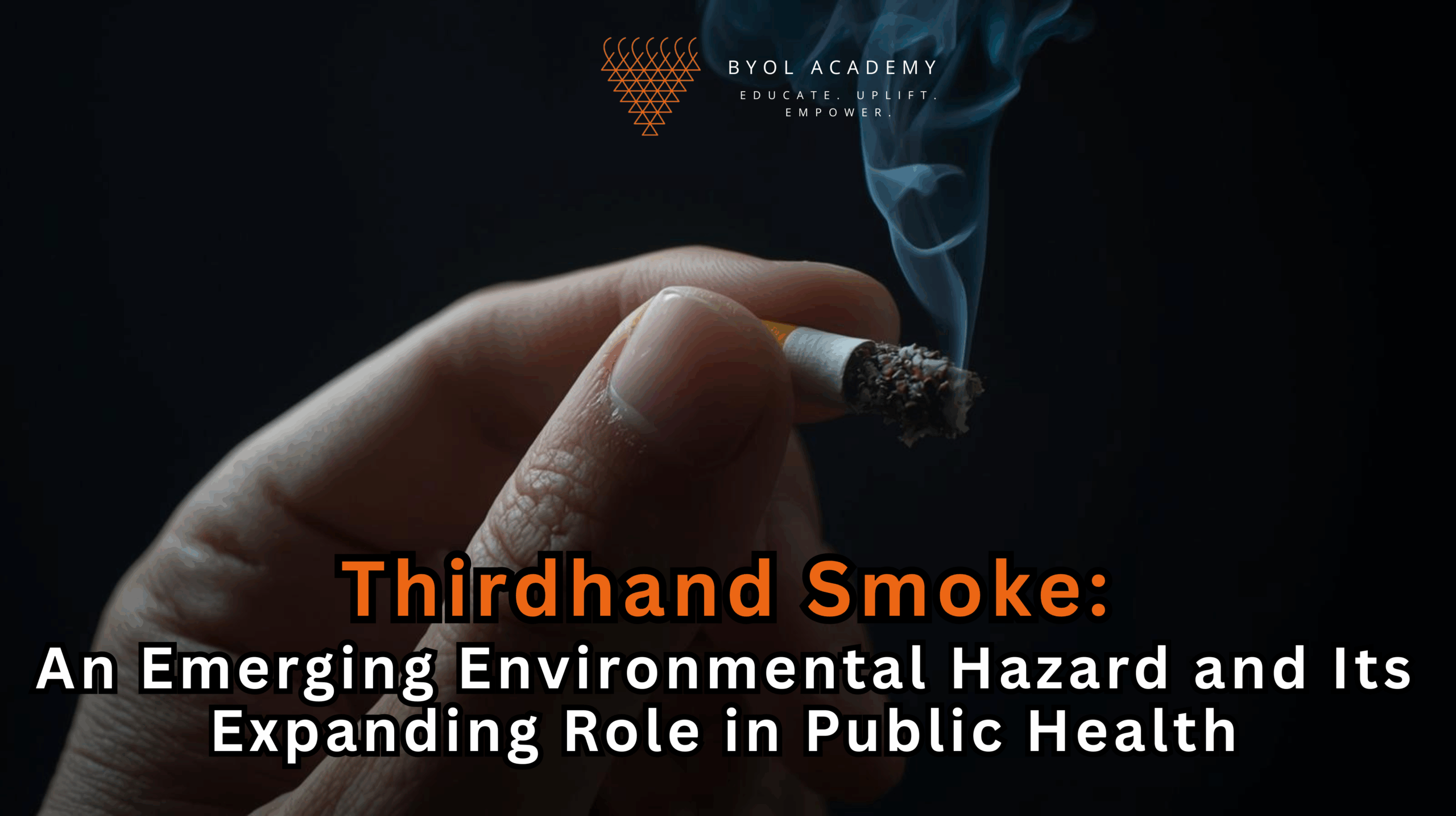
Tobacco smoke has always been treated as something that fades once the air clears. Open a window, turn on a fan, spray a little air freshener, problem solved. Yet modern analytical chemistry paints a very different picture, one that unsettles even seasoned public-health researchers. The chemicals from cigarette smoke do not drift away into nothingness. They settle. They cling. They transform. And they continue to harm.
This residue, known as “thirdhand smoke” is the invisible film that coats furniture, fabrics, human skin, household dust, and even the microscopic pores of walls. Long after a cigarette has burned out, these compounds remain chemically active, capable of generating carcinogens, triggering oxidative stress, and altering immune responses. Unlike secondhand smoke, which demands proximity and timing, thirdhand smoke creates a persistent exposure environment, especially dangerous for infants, children, and individuals with chronic illnesses.
Recent work led by the California Thirdhand Smoke Research Consortium, anchored at UC San Francisco (UCSF) with partners at San Diego State University and Lawrence Berkeley National Laboratory, has provided the most comprehensive evidence to date on how thirdhand smoke behaves, how long it persists, and what it does to the human body. This evidence has informed California Assembly Bill 455 (AB455), the first legislation in the world requiring disclosure of thirdhand smoke contamination in real estate transactions. The law will take effect on January 1, 2026, introducing new transparency into housing markets and acknowledging the scientific reality of long-term tobacco residue.
A recent JAMA article co-authored by Neal Benowitz, MD-professor emeritus of medicine at UCSF and a central figure in this field, summarizes why this policy shift marks an essential step forward for public health.
Thirdhand smoke refers to the complex mixture of tobacco-derived chemicals that remain on indoor surfaces after smoking occurs. When someone smokes, secondhand smoke drifts through a room, but a portion of that smoke adheres to and penetrates surrounding materials. Over time, these contaminants form a sticky, chemically active layer that can linger for months to years, depending on the history of smoking and the materials involved.
Nicotine is one of the primary chemicals found in thirdhand smoke, but it acts as a precursor to additional toxicants. When nicotine on surfaces reacts with nitrous acid (present in indoor environments from stoves, heaters, and outdoor pollution), it forms potent carcinogens known as tobacco-specific nitrosamines (TSNAs). This means that thirdhand smoke is not static, it continuously evolves, forming new hazardous compounds over time.
Even when the odor of smoke fades, the chemistry does not.
Thirdhand smoke penetrates porous materials deeply, making removal extremely difficult. Laboratory research shows:
In controlled chamber studies, thirdhand smoke chemicals re enter indoor air through:
Thus, even without visible smoke, individuals living in previously smoked-in environments are repeatedly exposed.
Thirdhand smoke contains many of the same harmful toxicants present in secondhand smoke, nicotine, heavy metals, polycyclic aromatic hydrocarbons, aldehydes, and nitrosamines. The State of California identifies 26 chemicals in thirdhand smoke as known causes of cancer, birth defects, or reproductive harm.
Research from the Consortium and other investigators has shown:
These effects occur in the absence of secondhand smoke, confirming that thirdhand smoke is an independent toxic exposure.
People exposed to thirdhand smoke show:
The residue disproportionately affects:
Infants receive a significantly higher exposure dose due to dermal absorption and hand to mouth activity. Their developing organs are more susceptible to the toxic effects of thirdhand smoke.
AB455 represents a watershed moment in global public health policy. The law:
By placing thirdhand smoke in the same category as lead, asbestos, and radon, AB455 acknowledges its growing scientific significance. It also creates a new expectation of transparency for buyers and renters.
This legislation sets a precedent for states and countries seeking strategies to protect families from indoor pollutants. Benowitz and colleagues argue that similar policies should be considered for rental units and multi unit housing, where vulnerable populations are disproportionately exposed.
Removing thirdhand smoke is challenging, and effectiveness depends on the level of contamination.
In heavily contaminated environments, especially older rental units or long-term smoker-occupied homes, remodeling is often the only reliable method of reducing exposure to minimal levels.
If the smoking history of a home is unknown, surface testing offers a practical option. The Thirdhand Smoke Resource Center at San Diego State University provides:
These kits can measure nicotine and related markers on indoor surfaces, helping residents determine whether remediation is necessary.
Benowitz notes that while contamination decreases over time, porous materials like wallboards can harbor residue for many years. Thus, “smoke-free for a long time” does not guarantee zero exposure.
Thirdhand smoke represents an evolution in how scientists conceptualize indoor pollutants. It demonstrates that tobacco exposure is:
This research shifts our understanding of homes, cars, hotels, and workplaces that have a history of smoking. It also reinforces the importance of smoke-free housing, transparent disclosure, and continued efforts to reduce tobacco use at the population level. The work of UCSF, SDSU, LBNL, and their collaborators is shaping a new chapter in tobacco control. As more evidence accumulates and policy frameworks develop, thirdhand smoke is poised to become a central consideration in environmental health, housing policy, and long-term public health strategy.
The residual chemistry of tobacco tells a clear story: even when the cigarette is extinguished, its toxic legacy persists, on surfaces, in dust, in the air, and in the bodies of those who inhabit the affected spaces.
Introduction Tracking progress is one of the most important aspects of any fitness journey. Whether you are a student, athlete, […]

India grapples with a persistent challenge: despite having formally established fire-safety regulations and building codes, many fire incidents continue to […]

Introduction Reasoning ability forms the foundation of logical thinking, decision-making, and problem-solving. Whether a student prepares for competitive exams or […]