
Introduction Fitness is more than just looking good, it is about how efficiently your body performs daily tasks, sports, or […]

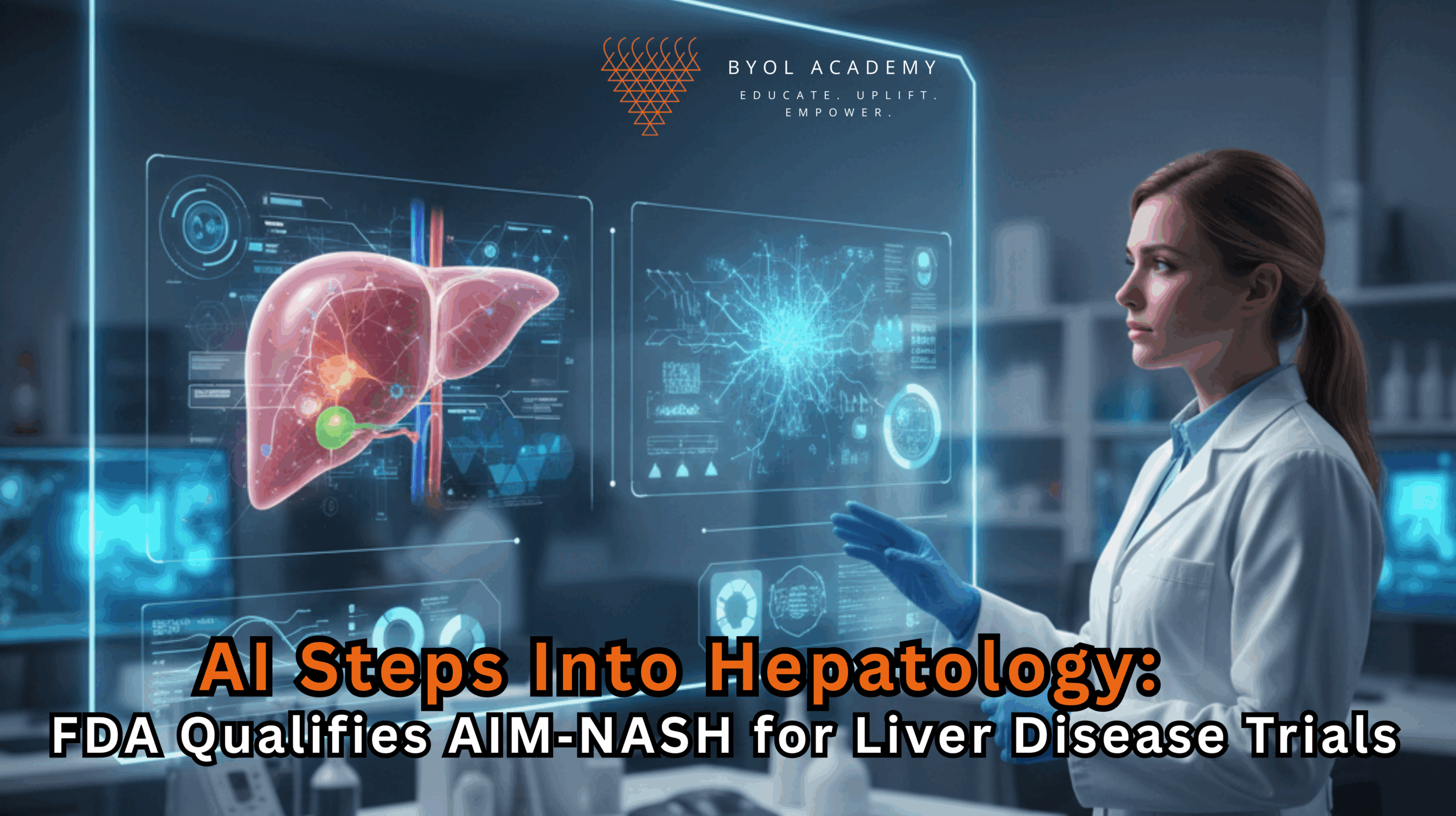
Recent developments in regulatory science have marked a pivotal moment for hepatology and clinical research. The U.S. Food and Drug Administration (FDA) has formally qualified AIM‑NASH, the first artificial intelligence (AI)–based tool validated for use in metabolic dysfunction‑associated steatohepatitis (MASH) clinical trials. This qualification represents a convergence of computational pathology, clinical rigor, and regulatory oversight, with profound implications for the conduct of clinical trials and the development of therapeutics for a disease of increasing global prevalence.
Metabolic dysfunction‑associated steatohepatitis is a progressive liver disease characterized histologically by steatosis, lobular inflammation, hepatocellular ballooning, and fibrosis. The disease trajectory frequently culminates in cirrhosis, hepatocellular carcinoma, and hepatic decompensation, posing a significant burden on healthcare systems worldwide. Accurate and reproducible histologic evaluation is indispensable for both patient selection and endpoint determination in clinical trials, yet conventional biopsy scoring is hindered by inter‑ and intra-observer variability.
AIM‑NASH (AI‑Based Histologic Measurement of NASH) is a cloud‑based digital pathology platform that applies machine learning to digitized microscopy images of liver biopsies. The system is trained to identify and score histologic features used in clinical trials, such as:
The platform generates standardized outputs which are subsequently reviewed by pathologists, ensuring that expert judgment remains central to clinical decision-making. AIM‑NASH is designed to enhance reproducibility, sensitivity, and efficiency in histologic assessment, particularly in multi-center clinical trials.
The FDA’s qualification of AIM‑NASH under its Drug Development Tool Qualification Program indicates that the tool’s performance is scientifically valid for use in histologic scoring within MASH clinical trials. Qualification does not equate to approval as a standalone clinical device; rather, it confirms that AIM‑NASH outputs are acceptable for drug development endpoints, including enrollment criteria and endpoint measurements in phase 2 and phase 3 trials.
The FDA based its decision on evidence from comprehensive analytical and clinical validation studies showing that AIM‑NASH’s assisted scores were comparable to expert consensus scores from panels of pathologists. Qualification signals increased regulatory trust in AI as a supplement to human pathology expertise in rigorous clinical research.
Multiple analytical and clinical validation studies have quantified the performance of AIM‑NASH, demonstrating strong reproducibility, accuracy, and potential to reduce variability compared with manual scoring.
A large validation study involving 1,481 liver biopsy cases showed that AIM‑NASH provides high reproducibility, achieving 100% agreement when repeated reads were performed on the same images for key features. This reproducibility far exceeds typical intra‑pathologist variability seen in manual scoring. In detailed performance testing against expert consensus:
These figures fall within or exceed typical inter‑pathologist agreement ranges, emphasizing the AI’s strength in consistency across histologic domains.
Furthermore, retrospective application of AIM‑NASH to completed clinical trials has suggested that AI could detect statistically significant treatment responses in cases where manual pathology did not, and it often identified a greater proportion of responders among treated patients than manual reads. In some analyses, trials assessed retrospectively with AIM‑NASH may have met primary endpoints that manual scoring missed, illustrating enhanced sensitivity in detecting histologic changes.
The AIM‑NASH algorithm was developed and trained on a very large, meticulously annotated dataset created by expert pathologists. The training involved more than 100,000 annotations from 59 pathologists who reviewed over 5,000 liver biopsy samples from nine different clinical trials. This extensive annotation set ensured the model learned to recognize diverse histologic patterns across a broad spectrum of disease severity.
The qualification of AIM‑NASH promises several important benefits for clinical research:
AIM‑NASH has also been recognized by the European Medicines Agency (EMA), whose human medicines committee qualified the tool earlier in 2025 for use in MASH clinical trials under a similar context of use. For the EMA qualification, evidence showed that AIM‑NASH provided less variability than consensus scoring by three independent pathologists, reinforcing its value in international clinical research settings.
The EMA’s qualification was based on the same extensive training dataset and supported the conclusion that AIM‑NASH can reliably determine disease severity in MASH biopsies with improved consistency over conventional approaches.
Despite these advances, several challenges remain in fully realizing AI’s potential in histopathology:
Standardizing pre‑analytic variables: Differences in slide staining, imaging scanners, and tissue preparation can affect digital image quality. Ensuring consistent input data across trial sites is critical for maximizing AI performance.
Training and workflow integration: Pathologists and clinical site teams need training and workflow redesign to efficiently incorporate AI outputs without disrupting established clinical practices.
Long‑term validation: While current results are promising, ongoing studies with diverse populations and across different scanners and staining protocols will further strengthen confidence in AIM‑NASH’s utility.
The FDA’s qualification of AIM‑NASH as the first AI tool for liver disease clinical trials represents a major milestone in medical science and regulatory innovation. By offering high reproducibility, comparable accuracy to expert consensus, and the potential to improve trial consistency and sensitivity, AIM‑NASH stands poised to accelerate the development of much‑needed therapies for MASH. As AI continues to evolve, tools like AIM‑NASH may lay the groundwork for a new era in clinical research where machine intelligence reliably augments human expertise to deliver better, faster outcomes for patients.
Introduction Fitness is more than just looking good, it is about how efficiently your body performs daily tasks, sports, or […]

Introduction Reasoning ability forms the foundation of logical thinking, decision-making, and problem-solving. Whether a student prepares for competitive exams or […]

India grapples with a persistent challenge: despite having formally established fire-safety regulations and building codes, many fire incidents continue to […]