
Preparing for the UPSC Civil Services Examination demands a deep understanding of India’s geography, ecological zones, industrial regions, natural resources, […]

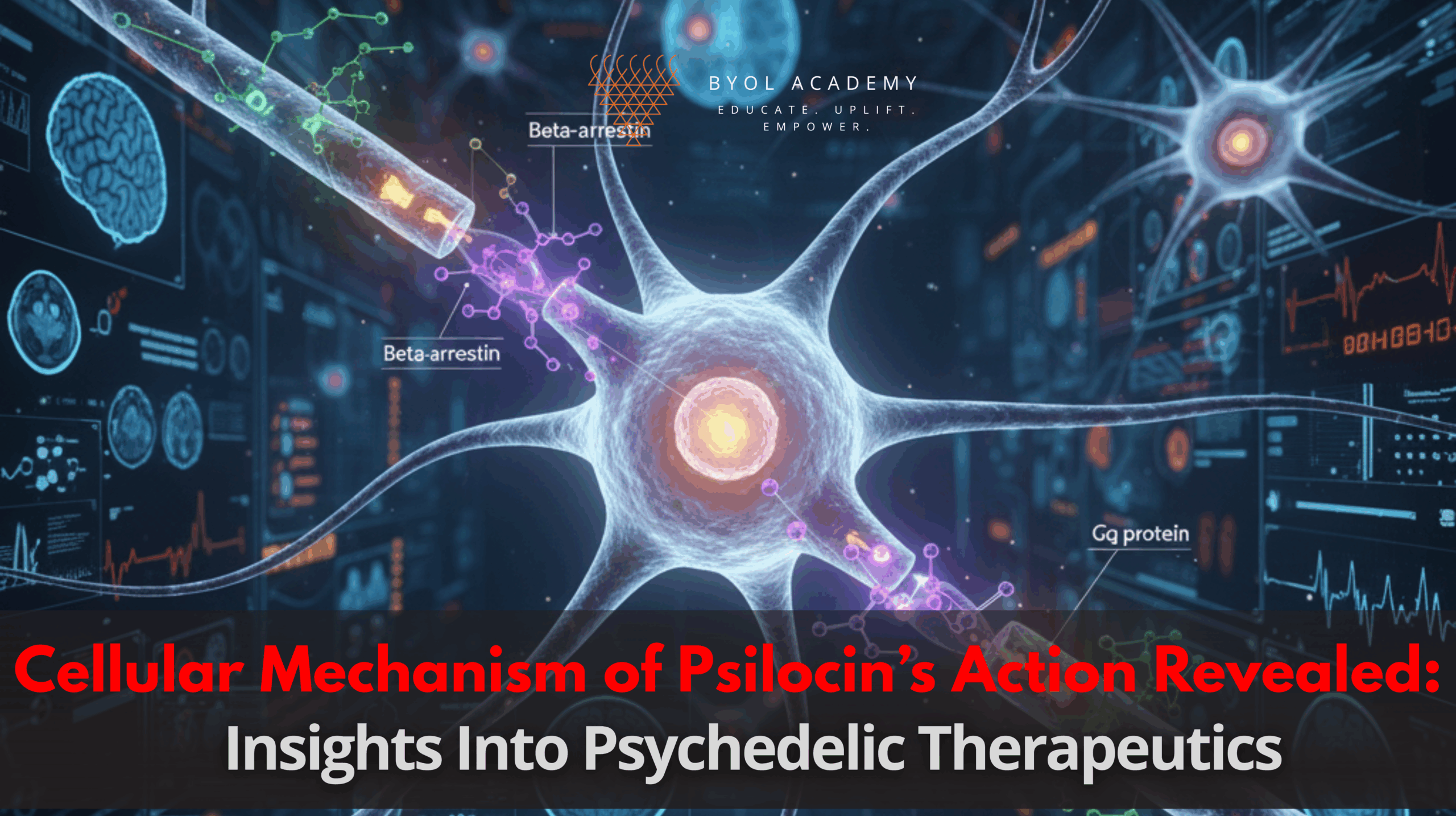
Psilocybin, metabolized to psilocin in vivo, is emerging as a potential therapeutic agent for neuropsychiatric disorders including depression and anxiety. Despite evidence from neuroimaging that psychedelics enhance prefrontal cortical activity, the cellular and molecular mechanisms underlying these effects have remained unclear. This study demonstrates that psilocin selectively increases the excitability of 5-HT2A receptor-expressing neurons in the medial prefrontal cortex (mPFC) via Gαq-mediated signaling, providing a mechanistic link between receptor activation and cortical network modulation. These findings illuminate the neurobiological basis for the therapeutic potential of psychedelic compounds and suggest pathways for future targeted interventions.
Psilocybin and psilocin are being actively explored as treatments for neuropsychiatric conditions, including depression and anxiety. While previous human brain imaging studies have shown increased prefrontal cortex activity after psychedelic administration, the exact cellular mechanisms driving these changes remained unclear.
In this study, researchers focused on the medial prefrontal cortex (mPFC), a brain region associated with higher-order cognition, mood regulation, and executive function. Using functional magnetic resonance imaging (fMRI) in mice, the team demonstrated that psilocin administration at 2 mg/kg significantly increased activity within the prelimbic and anterior cingulate cortices, key subregions of the mPFC.
To pinpoint the specific neurons affected by psilocin, the researchers performed electrophysiological recordings on brain slices. Initial measurements from general populations of layer V pyramidal neurons revealed variable responses: approximately half of the neurons increased their firing rate, around 30% decreased activity, and the remainder showed no change.
To resolve this variability, the team employed a genetically engineered mouse model in which neurons expressing the 5-HT2A receptor were fluorescently labeled. Psilocin consistently increased the firing rate of these identified neurons by nearly 200% of baseline activity and enhanced their intrinsic excitability. These effects were shown to result from direct action on 5-HT2A neurons, rather than changes in synaptic input from neighboring cells.
Further experiments confirmed the critical role of the 5-HT2A receptor in mediating psilocin’s effects. Application of the selective 5-HT2A activator NBOH-2C-CN reproduced psilocin’s excitatory effects, while the receptor blocker M100907 completely prevented neuronal activation. In contrast, blocking the related 5-HT2C receptor had no effect, indicating specificity for 5-HT2A signaling.
Investigating downstream intracellular pathways, the researchers showed that psilocin’s excitatory effect depends on Gαq protein signaling. Blocking this pathway with FR900359 inhibited psilocin-induced neuronal firing, confirming that 5-HT2A receptor activation engages a specific molecular cascade that increases neuron excitability.
This research helps clarify how psilocin increases activity in a defined population of prefrontal cortex neurons through 5-HT2A receptors,” said study author Melissa Herman, associate professor at the University of North Carolina at Chapel Hill. “Given the prefrontal cortex’s role in cognition and psychiatric disorders, these cellular effects may underlie some of the therapeutic potential observed in clinical studies.
Interestingly, the study also tested a non-hallucinogenic 5-HT2A activator, which similarly increased neuron firing. This finding suggests that psychedelic-related therapeutic benefits may be separable from hallucinogenic effects, an area of active research in psychopharmacology.
While providing important mechanistic insights, the study has limitations. All experiments were conducted in mice, and results may not fully translate to humans. The fMRI sample size was relatively small, and further studies are needed to understand how these cellular changes relate to behavioral and therapeutic outcomes.
Future research aims to explore sex differences, the impact of stress or pre-existing psychiatric conditions, and how repeated or long-term exposure to psychedelics affects neural circuits.
Scientists have now pinpointed a more detailed, cellular-level mechanism for psilocin’s action in the brain:
It activates 5-HT₂A receptors on cortical neurons via the Gα_q signaling pathway.
This triggers molecular cascades that promote neuroplasticity, including increased BDNF production, greater synaptic connectivity, and enhanced neuron excitability.
It also modulates the brain’s immune cells (microglia), reducing inflammation.
The medial prefrontal cortex plays a central role in translating these cellular changes into the characteristic behavioral and psychological effects of psychedelics.
These insights deepen our understanding of how psilocin works and strengthen the biological plausibility for its therapeutic use in psychiatric conditions.
Preparing for the UPSC Civil Services Examination demands a deep understanding of India’s geography, ecological zones, industrial regions, natural resources, […]

Introduction On 26 November 2008, Mumbai, India’s financial capital was turned into a warzone for nearly 60 hours, ten terrorists […]

The calf muscle, often overlooked in daily life, plays a critical role in maintaining healthy circulation and overall cardiovascular function. […]